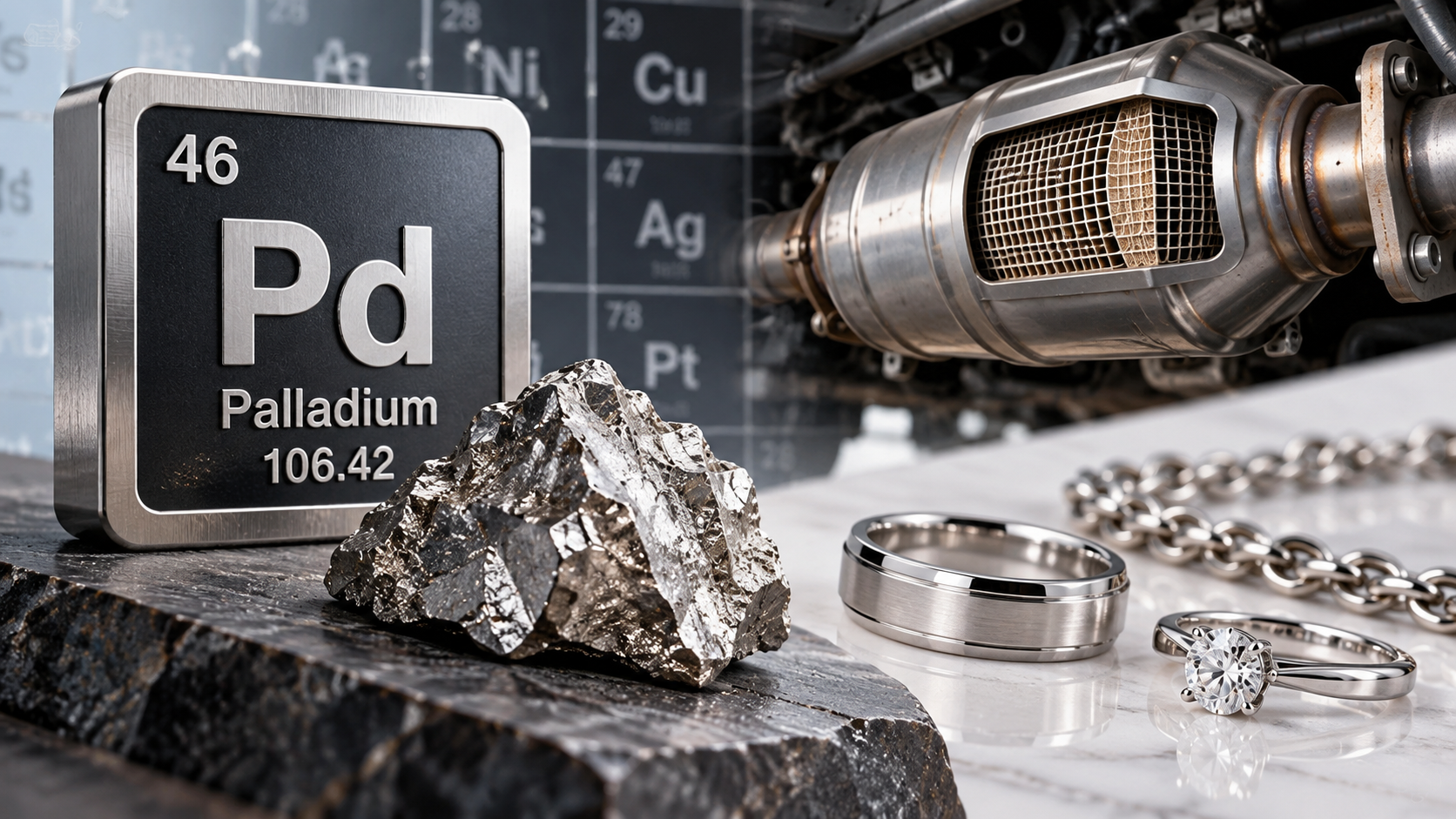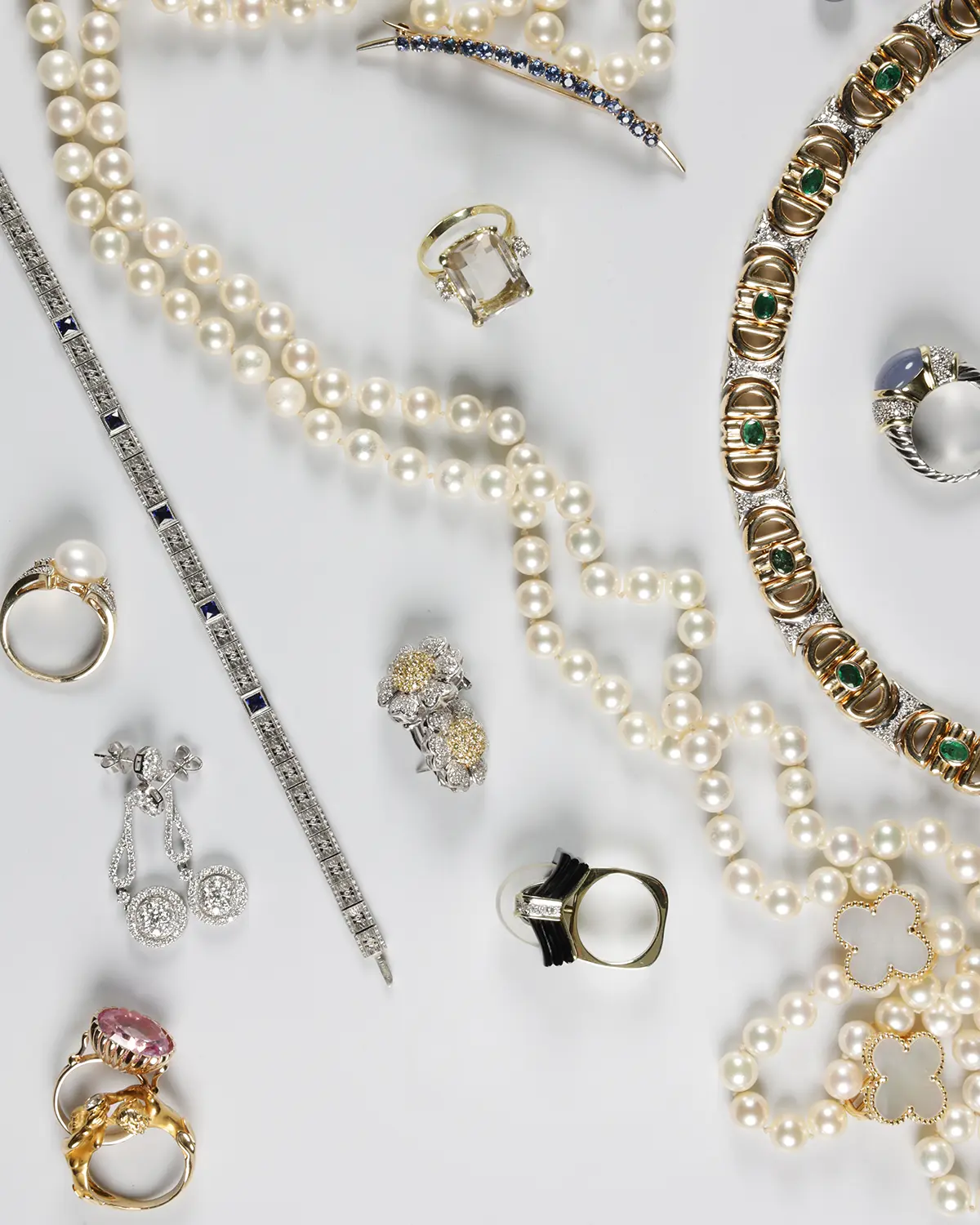
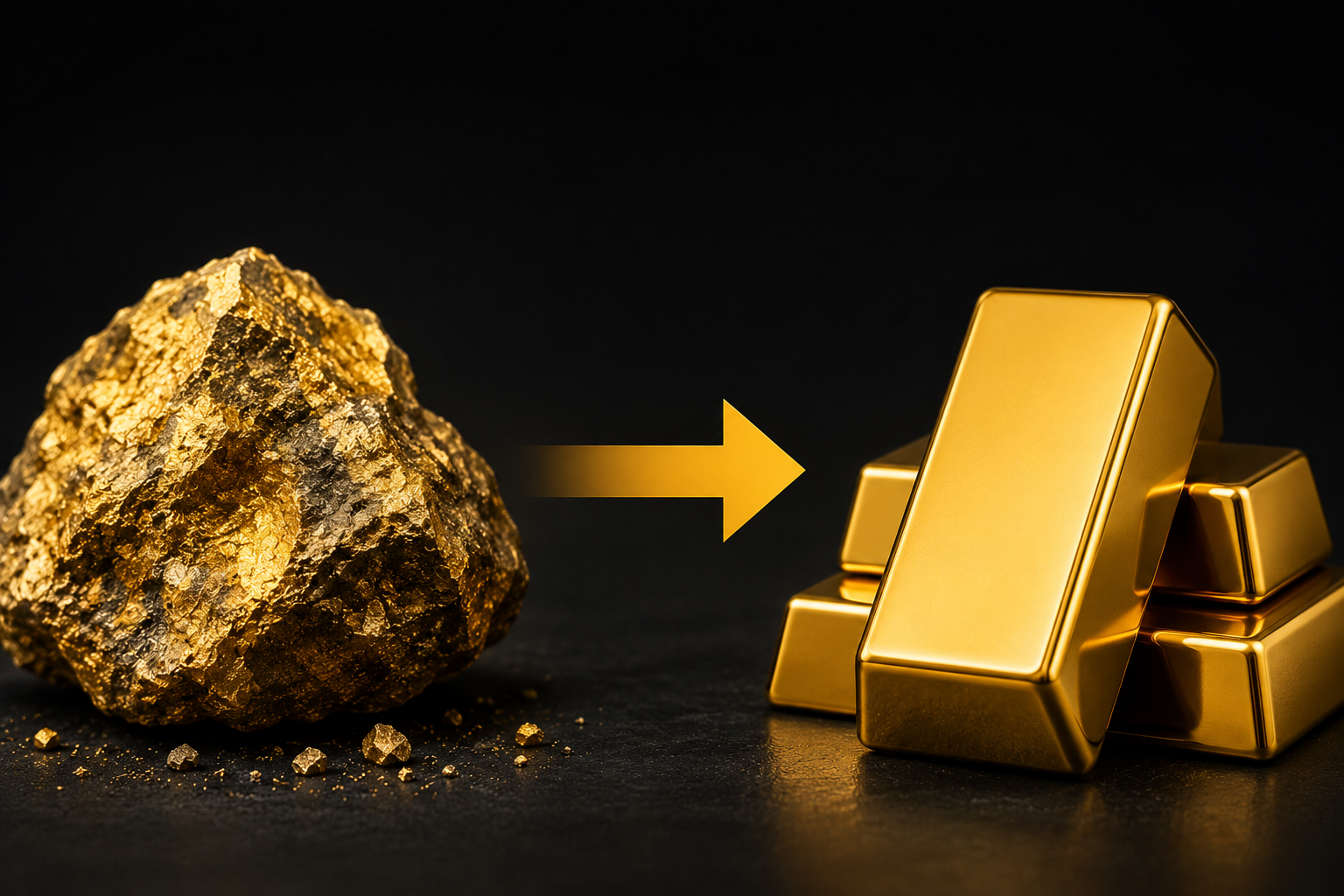
A gold ring, a silver coin, and a one-ounce bullion bar all started the same way. Somewhere, at some point, that metal came out of the ground mixed with rock and other elements, and it had to go through a long process before it became anything recognizable. Most people who buy or sell precious metals never think about what happens between those two points. It is worth understanding, because this process is exactly what determines the value
It Starts with Ore
Gold and silver are never found in a pure, ready-to-use state. Most commercially mined gold occurs in very low concentrations within rock ore, often alongside other minerals and metals1. Before any separation can happen, the ore has to be crushed and ground into fine particles, which increases its surface area and makes the gold or silver inside easier to access1. Common preparation methods include gravity separation, which takes advantage of gold’s density, and froth flotation, which uses chemical reagents to attach metal particles to air bubbles that rise to the surface1.
Silver is often even less straightforward. Almost all the world’s silver supply is not mined directly. It comes out as a byproduct of mining lead, copper, and zinc2. Historically, separating silver from lead required a dedicated process of its own, which is explained further below.
Smelting Separates Metal from Rock
Once ore has been broken down, it goes through smelting. This involves heating the material above gold’s melting point of approximately 1,000 degrees Celsius, often combined with chemical agents called fluxes, which bond with impurities and separate them from the metal3. Many modern operations also use a chemical leaching process to dissolve gold out of concentrated ore before it ever reaches a furnace4.
Smelting and refining are sometimes used interchangeably, but they are different stages. Smelting typically refers to the initial melting and separation of metal from ore or scrap material using heat, yielding a crude alloy that still contains impurities. Refining takes that material further to reach a precise purity level4.
Refining Gets It to Investment Grade
Smelted metal still is not pure enough to become a coin or a bar. One of the most widely used methods for reaching extremely high-purity metal is the Wohlwill process, an electrolytic technique invented in 1874 that can achieve purity as high as 99.999 percent. It works by dissolving gold at an anode and depositing pure metal onto a cathode as electric current passes through an acid solution, while silver and other metals are filtered out separately5.
This is also the stage where recycled material enters the process. Old jewelry, scrap gold, dental gold, and industrial scrap all get smelted down the same way newly mined ore does. At this point, a gold ring from an estate sale and gold extracted from a mine are treated identically. The metal does not carry a history. It is simply metal that needs to be purified.
Today, large scale silver refining commonly relies on electrolytic methods as well, including processes used during the electrolytic refining of copper, since silver is frequently recovered as a byproduct of that process2. In general, separating silver from the other metals it is commonly alloyed with requires more steps than refining gold, which is part of why silver refining capacity can become a bottleneck during periods of unusually high market activity.
Assaying Confirms the Purity
Once metal has been refined, it has to be tested to confirm exactly how pure it is before it can be sold or stamped with a purity mark. This testing is called assaying.Entities like COMEX and The London Bullion Market Association, which set standards for the gold and silver traded in the United States and London markets, respectively, require refiners seeking their Good Delivery accreditation to demonstrate precise assaying accuracy. While .995 is considered Good Delivery, 999 and 999.9 are common in modern bullion.
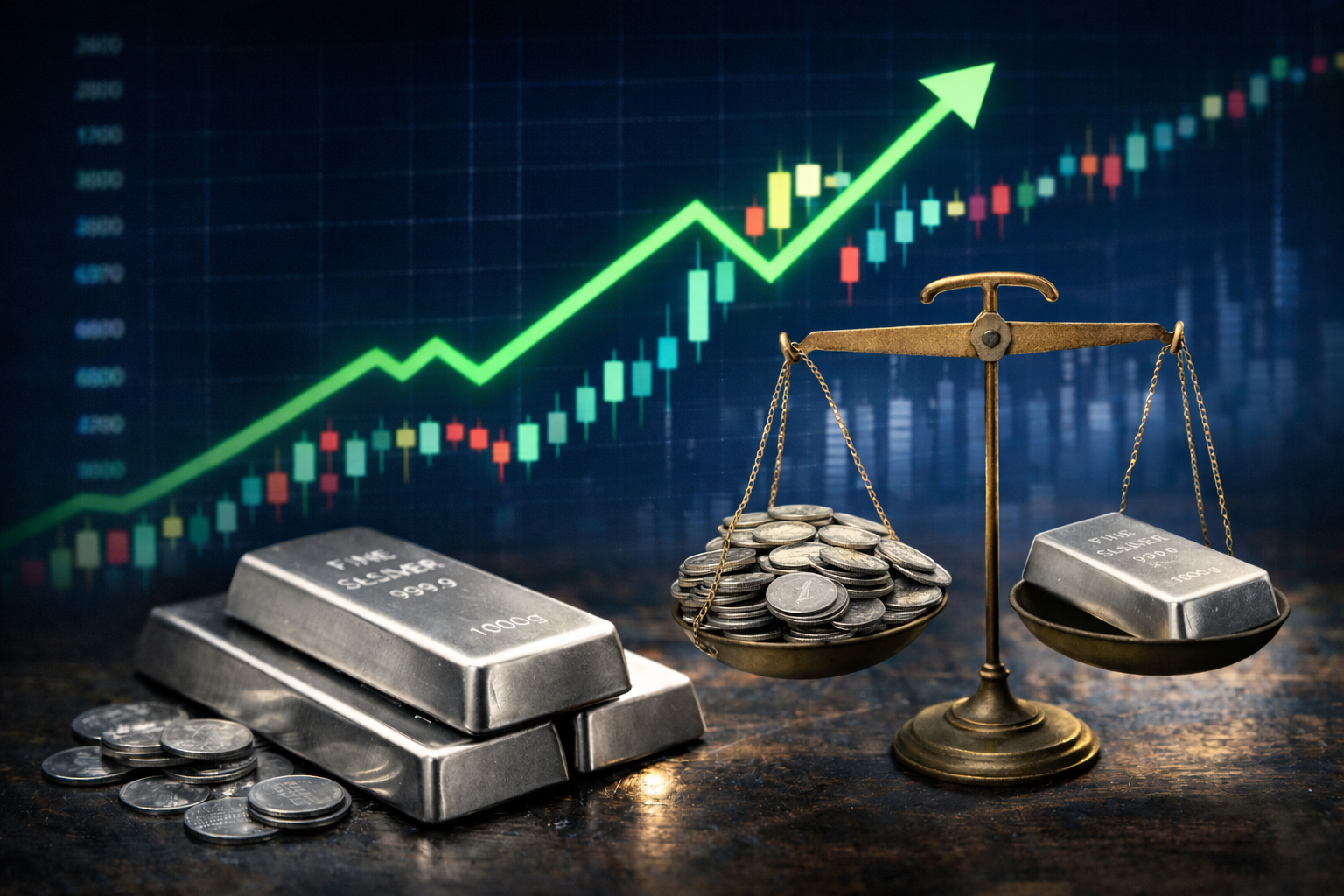
A refiner’s mark on a bar is essentially a promise, backed by testing, that the metal inside meets a specific standard. To be included on the LBMA’s Good Delivery List, a refiner generally must produce a minimum quantity of refined metal each year, demonstrate a substantial net worth, and pass ongoing third party audits covering purity, weight, and even physical appearance and stacking quality9. A Good Delivery gold bar typically has a minimum fineness of .995 and weighs around 400 troy ounces, while a Good Delivery silver bar weighs around 1,000 troy ounces10.
Where a Buyer Like PMR Fits into This Process
When you bring an item to PMR, it does not go straight into a furnace. The first step is testing and sorting. PMR uses XRF testing, visual inspection of purity marks, and other evaluation methods to determine exactly what an item is made of and how pure it is before any decision is made about what happens next.
For gold, PMR has the capability to melt certain items in house as part of preparing material for further processing. For silver, and for the deeper refining work required to reach final investment grade purity, similar to the refining process mentioned above. This is a common structure across the industry. Very few buyers handle every single step of the chain themselves, and the ones who claim to often are not being fully transparent about it.
What matters most for you as a seller is the testing step. That is where your item’s value actually gets determined, and it is the part of the process you can observe directly. Learn more about selling gold or selling silver to see how that evaluation works.
Why This Process Matters If You Are Selling
Understanding the refining chain helps explain a few things that often confuse sellers.
- Why purity testing matters more than appearance. A stamp on an item is a claim, not a guarantee. Testing is what confirms it.
- Why silver can take longer to process than gold. Modern silver refining still requires more steps than gold.
- Why the melt value and the actual value are not the same thing. Melt value reflects what the metal is worth once it has gone through this entire refining process to reach investment-grade purity. That is the number a buyer is ultimately pricing against and should consider when preparing to sell an item.
Frequently Asked Questions
Smelting separates metal from rock and ore using heat, often producing a crude alloy that still contains impurities. Refining takes that material further to reach a precise purity standard, such as .999 fine silver or 24 karat gold4. Smelting comes first, refining comes after.
An assay is a precise test that confirms the exact purity of a metal sample. Standards bodies like Comex and the LBMA require accredited refiners to maintain extremely precise assaying accuracy, which is what allows a bar or coin to legitimately carry a trusted purity mark8.
Silver is more commonly found alloyed with other metals, and historically required entirely separate extraction processes to pull it out of lead6. Gold, by comparison, can reach extremely high purity through simpler processes in a more direct path5.
Bullion accredited by Comex and the London Bullion Market Association, whose gold and silver bars meet stringent global standards for purity, weight, and physical quality. Only bars from refiners on this list are accepted for settlement in certain major bullion markets9.
PMR tests every item with XRF analysis and other verified methods before making an offer. Bring it in for a free evaluation at any location. No appointment needed.