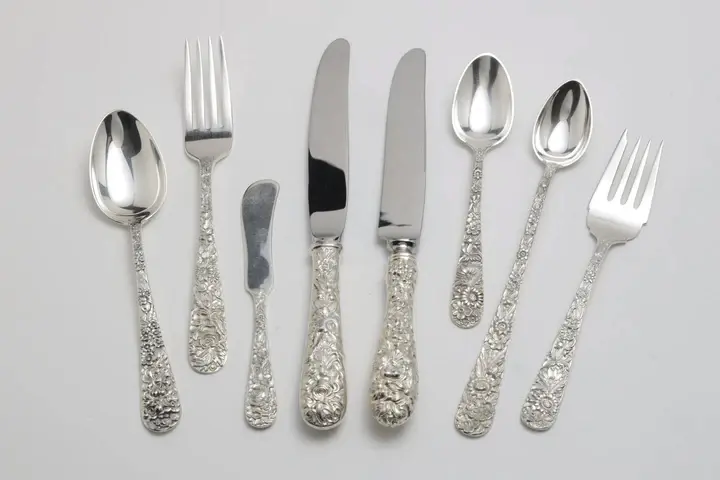
Somewhere in a lot of homes there is a wooden chest or velvet-lined box with a full set of silver flatware inside. It was a wedding gift, or it came from a grandparent, and it has been sitting in a cabinet for decades. If you have one of these and you are wondering whether it is worth anything, the answer depends on one thing: whether it is sterling silver or silver-plated.
Those two categories look almost identical but are valued very differently. Sterling silver flatware is worth real money. Silver-plated flatware generally is not. Knowing which one you have takes about thirty seconds if you know where to look.
Sterling Silver vs. Silver-Plated: What’s the Difference?
Sterling silver is an alloy made of 92.5% pure silver. The silver content runs all the way through each piece, which means it has real melt value. When you weigh it and apply the silver spot price, you get a number worth paying attention to.
Silver-plated flatware is a base metal, usually nickel, brass, or copper, with a thin layer of silver applied to the surface through electroplating. The silver content is measured in microns. If you melted a silver-plated fork, there would be almost no recoverable silver. The scrap value comes from the base metal, which is minimal.
A full set of sterling flatware can be worth several hundred to several thousand dollars depending on the weight and the pieces included. A silver-plated set of the same size is worth very little as metal, regardless of how it looks or what brand name is on it.
How to Tell What You Have
Flip a spoon or fork over and look at the back of the handle near the base. The stamp is usually small, so a magnifying glass helps. Here is what you are looking for:
Stamps that indicate real silver value:
- 925 or .925 — the standard mark for 92.5% silver content, used internationally
- STERLING — the most common mark on American flatware
- Lion passant — a small hallmark of a walking lion used on British sterling silver
- 800 or 830 — European silver standards indicating 80% or 83% silver content. Common on French, Italian, and Dutch flatware. Real silver value, slightly less per gram than sterling.
- 835 — a German and Russian silver standard. Also has real silver value and PMR purchases these pieces.
Stamps that indicate silver-plated:
- EPNS — Electro-Plated Nickel Silver. Despite the name, this is a plated product with almost no recoverable silver.
- EPBM, EP, Silver on Copper, Sheffield Plate — all plated, not solid silver
- A1, Triple, Quadruple — these refer to the thickness of the silver plating, not the silver content. Quadruple plate is still just plated.
- Rogers, 1847 Rogers Bros., Community Plate, Holmes & Edwards — well-known brand names, but these are silver-plate manufacturers. A recognizable brand name does not mean sterling.
If you are not sure what mark you are looking at, bring the pieces in. PMR tests everything and will tell you exactly what you have.
What Sterling Silver Flatware is Worth
Sterling flatware is valued by weight and the current live silver spot price. The calculation is weight in troy ounces, multiplied by 92.5% silver content, multiplied by spot price per troy ounce.
A full 12-place setting sterling set typically weighs between 60 and 120 troy ounces depending on the manufacturer and the pieces included. At current silver prices, that represents a meaningful payout. It is worth having evaluated properly before you assume it has no value or consider donating it.
A few factors can push the value above melt:
Complete Sets
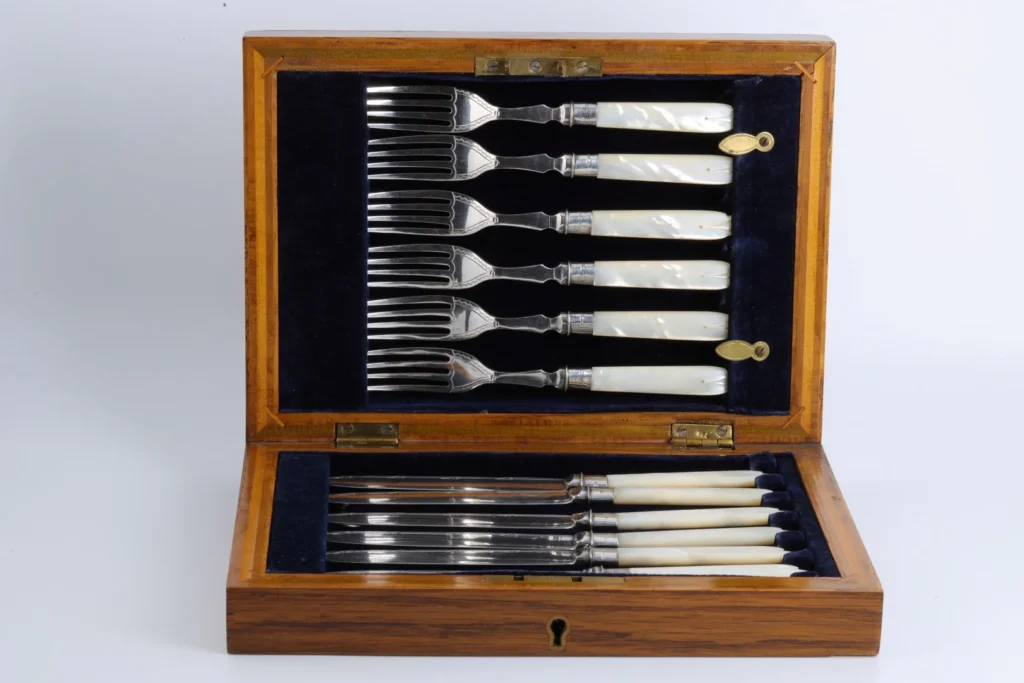
A full service for 12 with all matching pieces, in good condition, and with the original storage case or chest can have resale value above the melt price. Collectors and estate buyers pay a premium for complete sets. If yours is complete and the case is intact, that matters at the evaluation table.
Serving Pieces
Large serving pieces tend to be heavier than individual place setting pieces. A sterling ladle, carving set, or serving spoon can weigh several troy ounces on its own. Do not underestimate these.
Brand and Pattern
The most common American sterling brands PMR sees are Reed & Barton, Wallace, and Gorham. These are solid, well-made flatware lines and are valued at their sterling melt weight.
Certain luxury brands carry value above melt. If your flatware is marked Tiffany & Co., Cartier, Georg Jensen, or Buccellati, that changes the evaluation. These are high-end makers whose pieces are sought by collectors, and PMR pays accordingly. If you have one of these brands, make sure to mention it when you come in.
What About Silver-Plated Flatware?
Currently, PMR does not purchase silver-plated flatware. Because the silver content is measured in microns rather than running through the full piece, there is almost no recoverable silver value. If you bring in a plated set, our buyers will tell you that upfront at no charge.
If you are not certain whether your set is sterling or plated, bring it in anyway. The evaluation is free, takes a few minutes, and leaves you knowing exactly what you have. That is worth knowing regardless of the outcome.
What to Bring and How to Prepare
A few things to keep in mind before you come in:
- Bring everything. Individual pieces, serving pieces, and the storage case if you have it. A complete set is worth more evaluated as a whole.
- Do not polish it first. Polishing removes a small amount of surface silver and does not help the evaluation. Bring pieces as they are, tarnish and all.
- Note if the set is complete. If you know how many place settings are included and whether any pieces are missing, that helps the buyer give you an accurate assessment.
- Large estates can be evaluated at home. If you have flatware along with other silver, gold, or jewelry from an estate, PMR offers in-home consultations in select markets. Our buyers come to you.
How PMR Evaluates Silver Flatware
Our buyers verify hallmarks, use XRF testing to confirm the actual silver content of each piece, and weigh everything in troy ounces on calibrated scales. XRF testing reads the exact elemental composition without scratching or damaging the piece, so we can confirm whether a stamp is accurate and identify the precise silver content. There is no cost for the evaluation and no obligation to sell. Learn more about selling silver.
Frequently Asked Questions
Bring it in. PMR’s XRF testing gives you a definitive answer in minutes without any damage to the pieces. Guessing based on appearance, age, or brand name is unreliable. Many plated sets were made by well-known manufacturers and look identical to sterling.
For melt value, missing pieces mean less total weight, which lowers the payout proportionally. For resale value, completeness matters more. A set missing several pieces is harder to sell intact and may be valued at melt rather than resale. Bring what you have and our buyers will assess it accurately.
No. Tarnish is surface oxidation and has no effect on the silver content of a piece. A heavily tarnished sterling fork contains exactly the same amount of silver as a polished one. Do not let the appearance of tarnish lead you to assume a piece has no value.
You can sell any amount. A single serving spoon, a few mismatched pieces, or the entire collection. PMR buys sterling silver in any quantity. If you are not sure what to keep and what to sell, a free evaluation gives you the information to make that decision.
Sterling holloware is evaluated the same way as flatware: hallmark verification, XRF testing, and weight. Large sterling trays and serving bowls can be significantly heavier than a full flatware set. If you have both flatware and holloware from an estate, bring everything together for a complete evaluation.
Yes. If you have silver coins along with your flatware, PMR evaluates both. Pre-1965 US coins contain 90% silver and are a separate category from flatware.
Bring it to any PMR location for a free evaluation. Our buyers will test it, weigh it, and give you a straight answer. No appointment needed. Find a location near you