Selling a Rolex can feel intimidating, especially if you have never sold a luxury watch before. Many owners worry about getting ripped off, shipping something valuable, or simply not knowing what their watch is actually worth.
The reality is that selling a Rolex is usually straightforward when you understand what buyers look for and how the process should work. We break down the key factors that affect value, the safest ways to sell, and how to avoid common mistakes so you can make an informed decision.
What Determines the Value of a Rolex
Before you sell, you need to understand what factors influence your watch’s value. Rolex valuation is not arbitrary. Professional buyers evaluate several specific criteria.
Model and Reference Number
The model and reference number are the foundation of any Rolex valuation. Popular models like the Submariner, Daytona, and GMT-Master II consistently command higher resale prices due to strong collector interest and market demand. Discontinued references or limited production runs often appreciate significantly.
For example, a stainless steel Daytona typically holds its value better than a two-tone Datejust. The reference number tells buyers not just what model it is, but also details about its production period, materials, and unique features. Rare dial colors or limited configurations can push values even higher.
Condition and Originality
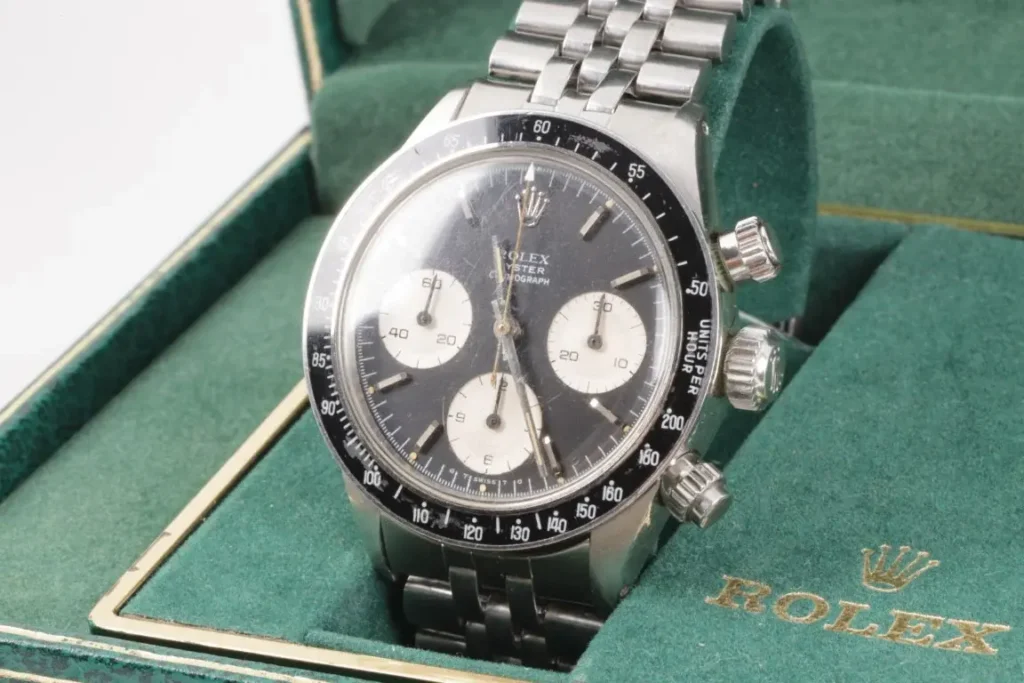
Condition matters enormously. A Rolex in excellent condition with minimal wear generally commands a higher offer than one showing noticeable scratches, dents, or replaced components. But here’s something many sellers don’t realize: original, unpolished watches are more valuable than heavily polished ones.
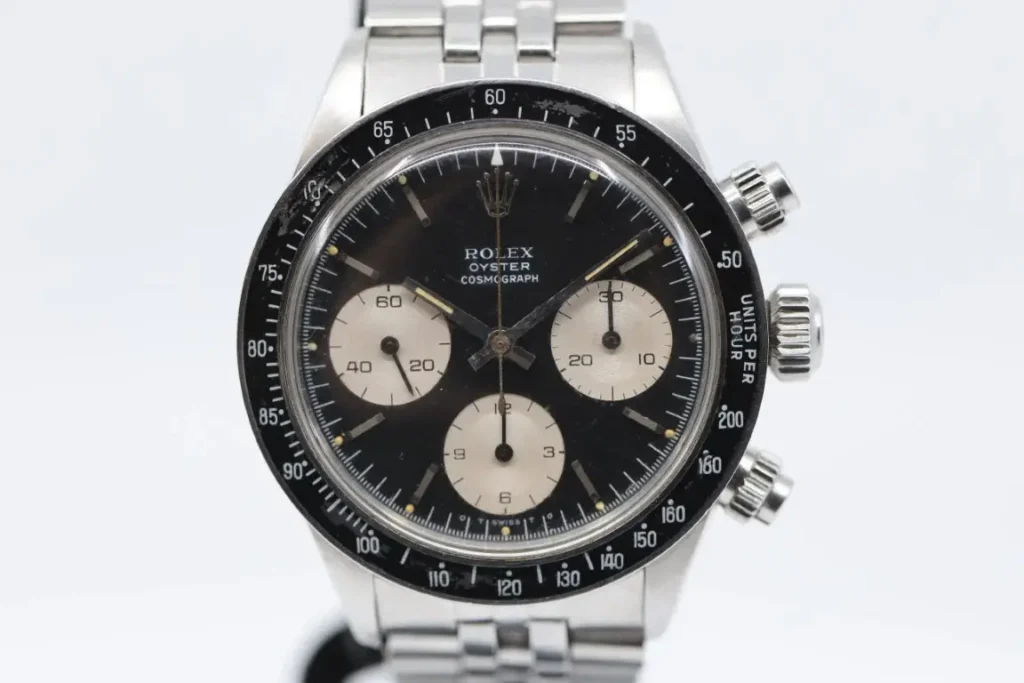
Over-polishing removes metal and softens the sharp lines and beveled edges that define a Rolex’s architecture. Collectors pay premiums for watches with original finishes, sharp lugs, and thick crown guards. Each polish removes a bit of the watch’s history and its value along with it.
Originality extends to every component. Factory-original parts are critical to value. Aftermarket replacements, whether a bezel, crown, dial, or bracelet, often have a meaningful negative impact on resale value. The secondary market rewards authenticity and penalizes modifications.
Service History and Mechanical Condition
A watch that runs well and has been properly maintained holds more value. Buyers want to know the movement is healthy, rust-free, and recently serviced. Documentation from authorized service centers is particularly valuable because it confirms the watch received proper care and that no unauthorized repairs were made.
Regular servicing maintains both the watch’s performance and its market value. Vintage pieces especially benefit from documented service history, as mechanical integrity becomes more critical with age.
Box, Papers, and Documentation
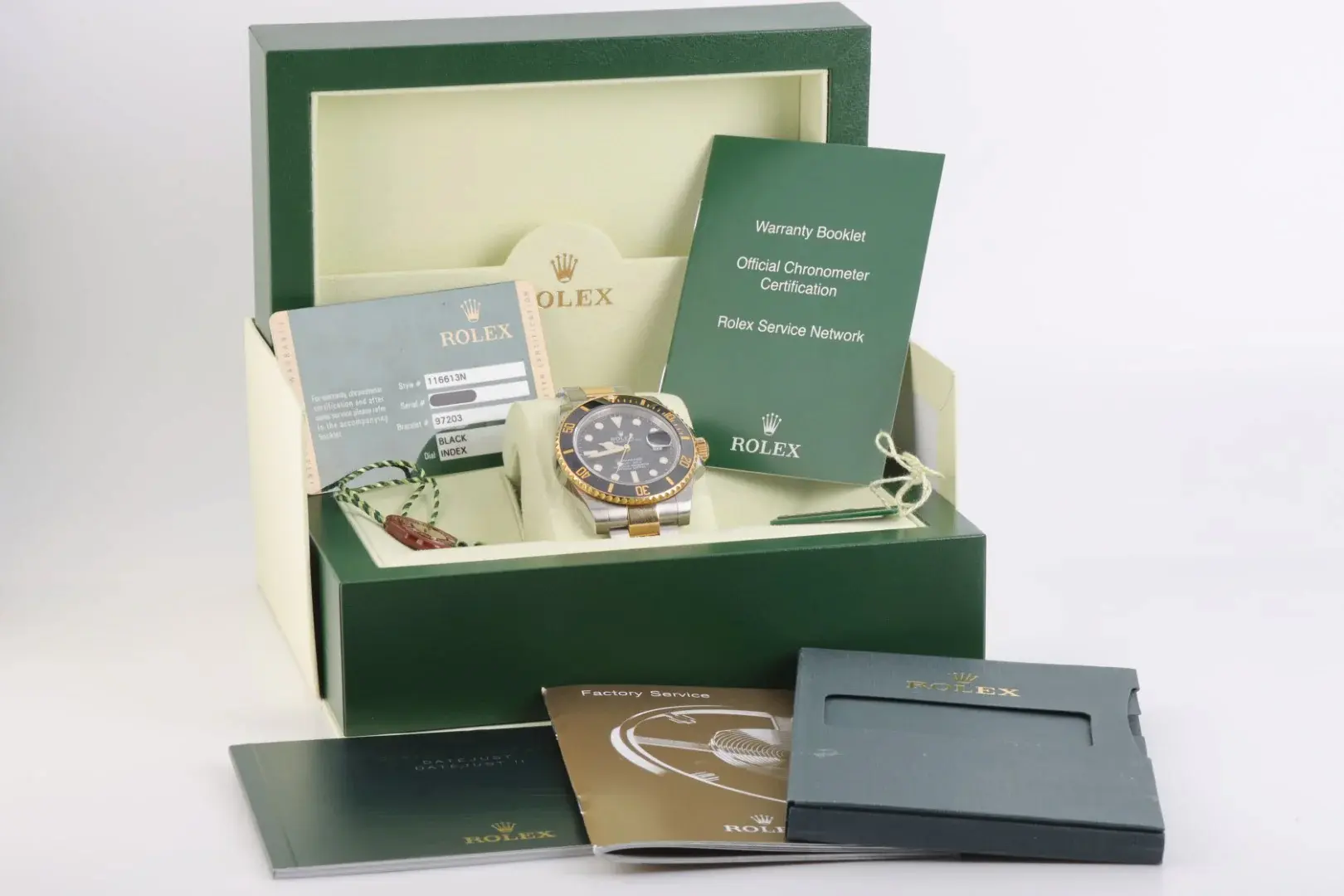
Original boxes, warranty cards, manuals, and purchase receipts significantly impact resale value. A complete set with the original box and papers generally increases a watch’s desirability and can result in a stronger offer, especially for sought-after or collectible models.
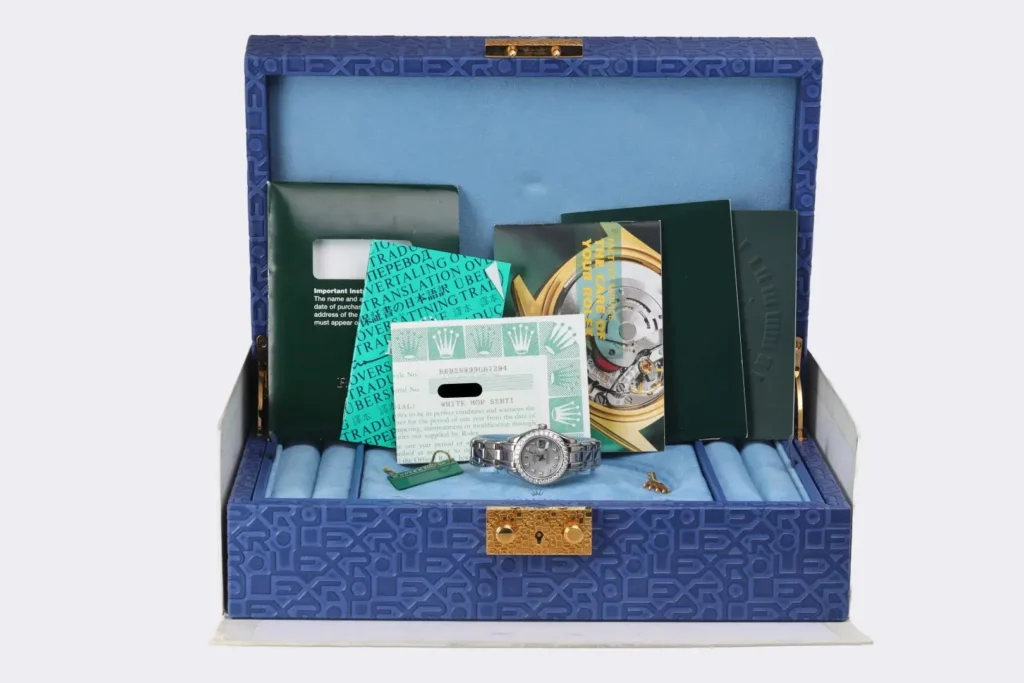
The warranty card is especially important because it provides verifiable proof of authenticity with a matching serial number. Together with the box, these items preserve the watch’s provenance and give buyers confidence they’re purchasing a genuine Rolex with a documented history.
Without documentation, your watch becomes what the market calls “naked.” While still sellable, naked watches sell for less because buyers must rely entirely on physical inspection to verify authenticity, which takes more time and introduces more risk.
Current Market Demand
Market demand fluctuates based on trends, economic conditions, and what’s currently popular among collectors. Some models appreciate quickly when Rolex discontinues them or when celebrity endorsements drive demand. Others remain steadier.
Stainless steel sports models have historically outperformed precious metal dress watches in terms of appreciation. Current availability, waiting lists at authorized dealers, and recent auction results all influence what buyers are willing to pay today.
The Safest Ways to Sell a Rolex or Luxury Watch
Where you sell matters as much as what you’re selling. Each option carries different risks, timelines, and expected returns.
Local In-Person Buyers
Selling to a local buyer offers immediate payment and eliminates shipping risks. You meet face-to-face, receive an evaluation, and can walk out with cash or a check the same day. This works well if you value convenience and want to avoid the uncertainty of mailing a valuable watch.
Reputable in-person buyers like Precious Metals Refinery specialize in evaluating luxury watches face-to-face, offering transparency without the risks associated with shipping high-value items.
One trade-off can be a more conservative offer, especially from buyers who do not specialize in luxury watches. Local jewelers and pawn shops often have limited resale reach and may need to build in more margin to account for slower turnover. However, reputable local buyers who specialize in luxury watches can provide competitive offers based on real-time market data.
When selling locally, choose established businesses with physical locations, verifiable credentials, and positive reviews. Meet in a secure environment like their office or store, never in a parking lot or public place where you could be targeted.
Online Luxury Watch Buyers
Online buyers provide access to a national market and typically offer more competitive pricing because of their larger customer base and faster inventory turnover. Reputable online buyers understand market values and use current sales data to make offers.
The process usually involves requesting a quote, receiving a preliminary offer, shipping your watch with insured packaging, and receiving final payment after inspection. The main concerns are shipping risk and the lack of face-to-face interaction.
Choose online buyers with strong reputations, transparent processes, clear communication, and fully insured shipping. Look for companies that provide prepaid shipping labels with full insurance coverage. The best online buyers have been in business for years and have hundreds of verified customer reviews.
Consignment Services
Consignment means a dealer lists your watch for sale and takes a commission when it sells. You potentially receive a higher price because the watch is marketed at closer to retail value. The dealer handles photography, listings, customer inquiries, and the transaction.
The downside is time. Consignment can take weeks or months, and there’s no guarantee of sale. You also pay commission fees that can meaningfully reduce your final payout. Consignment makes the most sense for rare, high-value pieces that can command premium prices from serious collectors.
Private Sales
Selling directly to another individual through online marketplaces or forums eliminates the middleman and potentially maximizes your return. But private sales also carry the highest risk of scams, counterfeit payment methods, and personal safety concerns.
If you choose this route, meet in secure locations like a bank, use verified payment methods, never ship before receiving cleared funds, and be prepared to authenticate the watch through a third party if requested. Many experienced sellers find the risks outweigh the potential benefits.
Step-by-Step: How the Selling Process Should Work
Knowing how legitimate buyers operate makes it much easier to spot red flags and avoid unnecessary risk.
Initial Contact and Quote Request
You reach out with details about your watch: model, reference number, approximate age, condition, and whether you have the box and papers. If selling online, you’ll typically upload photos. Professional buyers respond promptly with preliminary questions to better understand what you have.
Preliminary Offer
Based on the information provided, the buyer makes an initial offer. This is almost always contingent on physical inspection. Legitimate buyers explain that the final offer depends on verifying authenticity, assessing actual condition, and confirming all the details you described.
Be wary of buyers who commit to a final price sight unseen. Experienced professionals need hands-on evaluation to make accurate offers.
Secure Shipping or In-Person Appointment
For online transactions, the buyer provides a fully insured, prepaid shipping label. Insurance should cover the full estimated value of the watch. Package your watch securely (or use their provided packaging instructions), require a signature upon delivery, and keep all tracking information.
For local sales, schedule an appointment at their secure location. Bring identification, the watch, and any documentation you have.
Physical Inspection and Authentication
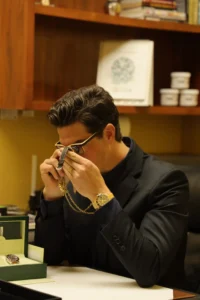
The buyer inspects the watch to verify authenticity, assess condition, check the movement, and confirm the originality of all components. They look at the serial numbers, reference markings, case and bracelet condition, dial and hands, bezel, crystal, and crown.
This inspection determines the final offer. If everything matches your description, the preliminary offer typically stands. If the buyer discovers undisclosed issues like aftermarket parts, excessive wear, or mechanical problems, they’ll adjust the offer or decline the purchase.
Final Offer and Acceptance
You receive the final offer with a clear explanation of how they arrived at that number. Legitimate buyers are transparent about their evaluation and give you time to consider without pressure tactics.
If you accept, you move to payment. If you decline, a reputable buyer returns your watch via insured shipping at no cost to you.
Payment
Payment methods vary. In-person transactions often involve cash or an immediate bank transfer. Online sales typically use wire transfer, check, or ACH transfer. Payment should arrive quickly, often the same day or within 24-48 hours of accepting the offer.
Never agree to unusual payment methods, gift cards, or requests to pay fees upfront. Legitimate buyers cover all costs and don’t require you to pay for anything.
Common Mistakes and How to Avoid Them
Sellers often make preventable errors that cost them money or expose them to fraud.
Unrealistic Expectations
Many sellers overestimate their watch’s value based on inflated online listings or retail prices. The reality is that buyers need margin to resell, and your watch’s condition, completeness, and current market demand all factor into offers.
Do your research. Look at completed sales on reputable platforms, not just asking prices. Understand that your watch likely won’t command retail value unless it’s in exceptional condition with full documentation.
Polishing or “Restoring” Before Selling
You might think cleaning up your Rolex will increase its value, but aggressive polishing usually does the opposite. Original finishes are prized by collectors. Over-polishing rounds off sharp edges and removes metal, making the watch less desirable.
Basic cleaning is fine. Removing dirt or dust doesn’t hurt. But leave heavy polishing and restoration to the new owner or their chosen specialist.
Not Disclosing Issues
Hiding problems always backfires. If your watch has been polished, has aftermarket parts, doesn’t run perfectly, or has condition issues, disclose them upfront. Legitimate buyers will discover these during inspection anyway, and if you weren’t honest, it destroys trust and often ends the transaction.
Transparency speeds up the process and helps you get a fair offer based on reality, not hopeful speculation.
Falling for Hidden Fees
Some less reputable operations advertise high offers but then deduct fees for shipping, insurance, inspection, or authentication after the fact. Your “great offer” shrinks significantly by the time you receive payment.
Ask upfront about any fees or deductions. Reputable buyers include all costs in their offer. What they quote is what you receive.
Shipping Without Insurance
If you’re selling online and need to ship your watch, always use fully insured shipping with signature confirmation. Never send a valuable watch via regular mail or inadequately insured shipping. If it’s lost or damaged in transit, you have no recourse.
Most professional buyers provide prepaid, fully insured labels precisely to avoid this problem. If they don’t, ensure the shipment yourself for the full value.
Accepting Deals That Sound Too Good
If someone offers you significantly more than market value or wants to close the deal immediately without proper inspection, something’s wrong. Scammers use inflated offers to hook victims, then use various tactics to steal the watch or reverse payment.
Trust your instincts. If an offer seems too good to be true, it probably is. Stick with established buyers who offer realistic, market-based prices.
Can You Sell a Rolex Without Box and Papers?
Yes, absolutely. Many Rolexes are sold without their original boxes and papers, especially older pieces or those that changed hands multiple times. However, the absence of documentation does impact value and the selling process.
How It Affects Value
When the original box and papers are missing, buyers usually factor that into their evaluation, which can lead to more conservative offers. The exact impact depends on the model, age, and rarity. For common modern references, the reduction might be on the lower end. For rare vintage pieces where provenance matters more, the impact can be greater.
Some buyers specifically seek out naked watches because they’re more affordable, and not every buyer cares about having the original presentation set. The watch’s authenticity and condition matter more than the box it came in.
What Buyers Look For
Without documentation, buyers rely entirely on physical inspection. They’ll carefully examine the serial and reference numbers engraved on the case, the movement and its markings, the case construction and finishing, the quality of the dial printing and hands, the bracelet style and clasp, and any other identifying features.
Experienced evaluators can authenticate a Rolex without papers by examining these details, but it requires more time and expertise. This is why you should only sell to knowledgeable buyers who have proper authentication capabilities.
Making the Sale Easier
Even without the box and papers, you can help the process by providing any receipts or proof of purchase you have, service records from watchmakers or Rolex service centers, photos of the watch from when you acquired it, or details about where and when you obtained it.
Any documentation helps establish provenance and builds buyer confidence. But even without any of this, a genuine Rolex is still valuable and sellable.
How to Protect Yourself from Scams
The luxury watch market attracts scammers. Protect yourself by recognizing red flags and following basic security practices.
Red Flags to Watch For
Be immediately suspicious if a buyer offers significantly more than market value, pressures you to move quickly without proper evaluation, requests upfront fees for authentication or shipping, uses only generic email addresses with no verifiable business information, refuses to speak on the phone or meet in person for local transactions, provides vague business details or no physical address, or asks you to ship the watch before payment clears.
Legitimate buyers are patient, transparent, professional, and willing to answer questions. They don’t pressure you or use manipulative tactics.
Verifying Buyer Credibility
Before engaging with any buyer, research their business online. Look for established websites with clear contact information, verified customer reviews on multiple platforms like Google and Trustpilot, physical locations you can verify, and years of business history.
Call them directly using a phone number you find independently, not one they provide. Verify they’re actually at the address they claim. Check if they’re members of professional organizations or accredited by business rating services.
Secure Communication
Use secure communication channels and never provide sensitive personal information unnecessarily. Legitimate buyers need basic contact information and details about your watch, but they don’t need your social security number, passwords, or extensive financial information upfront.
Payment Safety
For in-person transactions, meet at the buyer’s secure business location or a bank. Bring a companion if possible. Count cash carefully before handing over the watch, or watch the bank transfer complete in real-time.
For online transactions, use traceable payment methods like wire transfers or checks from verifiable financial institutions. Never accept payment via gift cards, cryptocurrency from unknown buyers, or any method that can be easily reversed or is untraceable.
Shipping Security
Never ship your watch using a service that doesn’t provide full insurance and signature confirmation. Use discreet packaging that doesn’t advertise you’re shipping a luxury watch. Keep all tracking numbers and shipping receipts.
If the buyer provided the shipping label, verify it actually has proper insurance coverage by checking with the carrier directly.
What to Bring When Selling Your Rolex
Whether meeting in person or preparing to ship, having the right items ready speeds up the process and can improve your offer.
The Watch Itself
Obviously, you need the watch. Make sure it’s clean, but don’t aggressively polish it. Remove any personal items from the bracelet. If the watch isn’t running, that’s fine, just disclose it upfront.
Original Box and Presentation
Bring the original Rolex box if you have it. The inner and outer boxes, along with any cushions or holders, add value. Even if they show age, original packaging helps.
Papers and Documentation
Gather the warranty card (sometimes called a guarantee card), original receipt or proof of purchase, service records and receipts, user manuals and booklets, and authenticity certificates if you have them.
The warranty card is most important because it has the serial number and proves an authorized dealer purchase. Service records show the watch received proper maintenance.
Hang Tags and Accessories
If you kept the original hang tags, swing tags, or even the protective plastic on the bracelet, bring those too. For complete packages, every original item contributes to value.
Valid Identification
All legitimate buyers require government-issued photo identification to comply with regulations and prevent stolen goods transactions. Bring your driver’s license, passport, or state ID.
Realistic Price Research
Come prepared with knowledge of what your watch actually sells for in current market conditions. Have examples of comparable sales from reputable platforms. This helps you evaluate offers fairly and negotiate if appropriate.
Why Sellers Choose Precious Metals Refinery for Luxury Watches
When it comes to selling luxury watches, including Rolex, in Arizona or Southern California, the right buyer makes all the difference. At Precious Metals Refinery, we provide the transparent, secure experience sellers need. Learn more about our watch buying services at our sell watches page or visit our Rolex-specific page at sell my rolex.
In-Person Evaluations in Convenient Locations
We operate physical locations where you can meet our team face-to-face. Our locations in Tucson and Phoenix, Arizona, as well as in Palm Desert and San Diego, Southern California, offer convenient options for in-person evaluations. You don’t need to ship your valuable timepiece to an unknown address and hope for the best.
Transparent, No-Obligation Offers
We evaluate each watch individually based on current market conditions, condition, authenticity, and completeness. Our offers are straightforward with no hidden fees or surprise deductions. You’ll know exactly what you’re being offered and why.
If you decide not to sell, there’s no obligation and no pressure. We return your watch to you immediately.
Secure and Private Transactions
All evaluations and transactions take place in our secure, private offices. We understand that luxury watch transactions involve significant value, and we treat each client with the professionalism and discretion they deserve.
Multiple Luxury Items Under One Roof
Beyond Rolex and luxury watches, we also purchase gold, silver, jewelry, diamonds, coins, and bullion. If you’re consolidating assets or have multiple items to sell, you can handle everything in one appointment.
Is Your Rolex Authentic? Here’s How to Verify
Before selling, especially if you’re unsure of your watch’s authenticity or history, consider having it verified. Counterfeit Rolexes are more sophisticated than ever, and unknowingly attempting to sell a fake can create legal issues and damage your reputation.
Look for signs of authenticity yourself, but understand that advanced counterfeits require expert inspection. For guidance on authentication, check out our detailed guide on How to Tell if a Rolex is Authentic.
Final Thoughts: Selling Your Rolex with Confidence
Selling a Rolex does not have to be complicated or stressful. When you understand what drives value and choose a reputable buyer, the process becomes much more predictable and transparent.
Take your time, ask questions, and do not feel pressured to accept an offer you are not comfortable with. If you’re ready to sell your Rolex or simply want to understand its current value, reach out to Precious Metals Refinery. We’re here to provide honest evaluations and fair offers with no obligation. Contact us at any of our locations in Tucson, Phoenix, Palm Desert, or San Diego to schedule a private consultation.
Frequently Asked Questions About Selling a Rolex
Your Rolex’s value depends on its model, reference number, condition, whether you have the box and papers, service history, and current market demand. Popular sports models like the Submariner or Daytona in excellent condition with full documentation command the highest prices. Get a professional evaluation to know your specific watch’s worth.
Yes, you can absolutely sell a Rolex without box and papers. However, the absence of documentation is commonly reflected in a lower valuation, as buyers favor complete sets with clear provenance. The watch itself is still valuable and sellable based on its authenticity and condition.
The best method depends on your priorities. Local in-person buyers offer immediate payment and no shipping risk, but may offer less than online buyers who have larger markets. For convenience and competitive pricing, reputable online luxury watch buyers are often ideal. Rare pieces might benefit from auction houses or consignment.
Research the buyer thoroughly. Look for established businesses with physical addresses, years of operation, hundreds of verified customer reviews, transparent processes, and professional communication. Legitimate buyers don’t pressure you; they answer questions openly, and they never ask for upfront fees. When in doubt, check with the Better Business Bureau and read reviews on multiple platforms.
No, aggressive polishing typically decreases value. Collectors prefer original finishes with sharp edges and defined lines. Over-polishing removes metal and softens these details. Light cleaning is fine, but avoid heavy polishing or refinishing. Original condition is more valuable than restored condition.
This varies by method. In-person buyers can evaluate and pay you the same day. Online buyers typically complete the process within a few days to a week, including shipping time and inspection. A consignment or auction can take weeks or months. Choose your method based on whether you prioritize speed or potentially higher returns.
At a minimum, you need valid government-issued photo identification. Having the original warranty card, purchase receipt, service records, and manuals significantly helps and increases value. Even without these papers, you can sell a Rolex, though offers will be lower because authentication relies entirely on physical inspection.